The beauty of a custom hat is not just its high perceived value. You dictate how your hat can look. You can make it look premium or playful or bold or goofy or cheap.
It all comes down to the decoration method.
Blank hats matter, but the logo application matters just as much. That feeling you get when you see a structured cap with a stitched logo on it and a foam trucker hat with a full-color print on it is different. A heat transfer can be fast and colorful, but it may not carry the same long-term feel as embroidery.
So which decoration method should you choose for your hat? That choice should depend on the design, order size, budget, fabric, and how the hats will be used.
This guide explains the three most common custom hat decoration methods: Embroidery, DTG, and Heat Transfer, so wholesale buyers can choose the right option before placing a bulk hat order.
Method 1: Embroidery
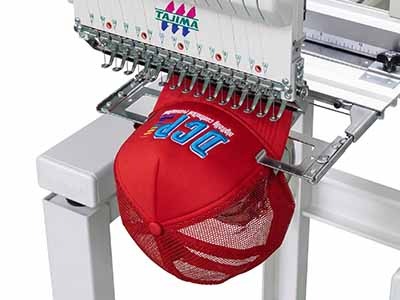
With embroidery, a hat is decorated by stitching threads directly into the fabric, typically on the front panel. For this, the logo is first converted into a stitch file first - which is known as digitization. That file tells the embroidery machine where to place each stitch, which thread colors to use, and how the design should run on the cap. Of course this is only one aspect that dictates the
quality of embroidery on a hat.
Embroidery is one of the most trusted cap decoration options because it looks professional and lasts well. Custom embroidered hats look and speak premium, and typically are sold at a higher price compared to printed hats. A good majority of organizations and businesses invest in wholesale embroidered hats featuring company logos, team names, initials, short text, and even simple brand marks.
Best uses for embroidery:
- Corporate hats
- Team caps
- Uniform headwear
- Golf hats
- Staff apparel
- Resale caps
- Event hats with a premium look
- Business logo hats
The biggest strength of this decoration method is texture, which is obviously what contributes to that premium finish. Embroidery has a raised feel that gives the cap more perceived value. It works best on structured caps because the firm front panel supports the stitches and helps the logo hold its shape.
Embroidery is not perfect for every design. Tiny text can fill in. Gradients do not translate directly into thread. Photo-style artwork usually needs to be simplified. Large filled designs can also raise the stitch count, which may increase cost and production time.
Best hat types for embroidery:
- Structured baseball caps
- Snapbacks
- Dad hats (only simple logos)
- Trucker hats with stable front panels
- Performance caps
- Beanies with suitable knit structure
For most business buyers asking about hat embroidery vs printing, embroidery is the safer choice for long-term brand use. It looks clean, feels premium, and holds up well when the design is simple enough for thread.
In CapBargain, there is no minimum quantity for blank or custom embroidered hats. There is MOQ only for heat transfer orders, which requires a minimum 24 pieces. For single-unit and low-volume embroidery, setup charges apply however. But this is waived on orders above 24 pieces. Turnaround time depends on the artwork, stitch count, and order volume primarily. But our production department typically gets a 24-piece embroidery ready in a few days during low-demand season.
Method 2: DTG Direct-to-Garment Printing
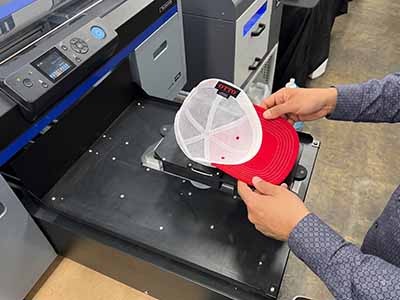
DTG stands for direct-to-garment printing. It uses a specialized inkjet printer to print water-based ink directly onto fabric. On T-shirts, DTG is popular for full-color artwork, gradients, small batches, and photo-style designs.
DTG on hats is more limited than DTG on flat apparel. Hats have curved panels, seams, buckram, crown structure, and less printable space. A cap does not sit like a T-shirt on a flat platen. That is why many buyers who ask for direct-to-garment hat printing may actually need a digital transfer, DTF transfer, or another print method approved for caps.
DTG can make sense for:
- Flat or low-profile cap panels
- Cotton or cotton-heavy fabrics
- Small-batch designs
- Artwork with many colors
- Soft-hand prints
- Photo-style graphics on approved surfaces
The advantage is detail. DTG can print artwork that embroidery cannot stitch cleanly. Gradients, shading, and fine color changes are easier with ink than thread. It also avoids stitch-count cost. But this can also be achieved with transfers.
The downside is cap compatibility. Curved surfaces can make placement harder. Textured fabrics can reduce clarity. Dark caps may need pretreatment and white ink, which can affect feel and cost. DTG may also be less practical for high-volume cap programs compared with embroidery or heat transfer.
Best hat types for DTG-style use:
- Smooth cotton caps
- Low-profile caps
- Some foam-front hats
- Flat printable panels
- Light-color caps
Use DTG only after confirming the hat fabric and decoration area. If the design is full-color but the cap shape is tricky, heat transfer or patches may be a better option.
CapBargain does not offer DTG on hats, and we don’t recommend the process to our customers either because of the risks involved. Instead, we bring that level of professional quality with flawless heat transfers on suitable styles.
Method 3: Heat Transfer
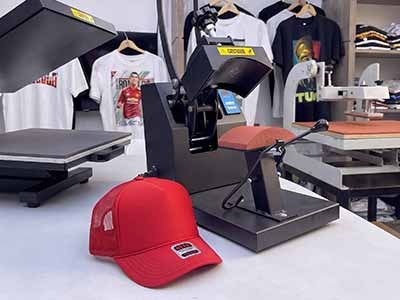
Heat transfer applies a design to the hat using heat, pressure, and time. The design may be cut from heat transfer vinyl for caps, printed as a digital transfer, or produced as another heat-applied graphic. A heat press bonds the design to the surface.
Heat transfer is useful for short runs, fast production, colorful logos, event hats, promo hats, and designs that are too detailed for embroidery. It can be a strong choice for small businesses, event organizers, and promotional product distributors who need custom caps in bulk without high stitch-count costs.
Best uses for heat transfer:
- Event hats
- Foam trucker hats
- Full-color graphics
- Short-run custom hats
- Budget-conscious orders
- Simple text designs
- Promotional giveaways
- Designs with gradients or many colors
The core difference is that heat transfer feels flatter than embroidery though it still looks sharp. Transfers look the best on foam-front hats, carrying more detail. The tradeoff is that it isn't as durable as embroidery. A heat-applied design sits on the surface and can succumb to cracking, peeling or edge lift over time or with heavy washing, flexing, and rough use. High heat can also damage the prints.
Caps are harder to press than shirts. A curved hat needs even pressure across the front panel. A flat press can miss the edges. That is why CapBargain follows a strict production cycle that uses cap-shaped platens, proper placement, and test runs to ensure exceptional quality every single time.
Best hat types for heat transfer:
- Foam-front trucker hats
- Smooth structured caps
- Flat or seamless front panels
- Caps with stable decoration zones
- Light to midweight fabrics approved for heat
We recommend avoiding heat transfer on hats that cannot tolerate heat, heavy texture, uneven seams, or delicate materials.
As mentioned before, heat transfer orders in CapBargain have a minimum order quantity of 24 pieces but with fast turnarounds generally.
Comparison Table
Here’s a quick breakdown for reference.
|
Factor
|
Embroidery
|
DTG
|
Heat
Transfer
|
|
Best
for
|
Logos,
text, premium branding
|
Full-color
art on approved fabric
|
Short
runs, colorful graphics, event hats
|
|
Look
|
Raised
and textured OR Puffed
|
Flat
and soft
|
Flat
or slightly raised
|
|
Durability
|
Strongest
for long-term use
|
Moderate,
depends on fabric and care
|
Good
with proper application, but surface wear can happen
|
|
Design
complexity
|
Best
for simple, bold designs
|
Best
for photos, gradients, detail
|
Good
for simple to detailed graphics
|
|
Cost
|
Can
rise with stitch count
|
Better
for small batches than large runs
|
Often
practical for short runs and promos
|
|
Minimum
order quantity
|
None
|
Service
Not Available
|
24
pieces and above
|
|
Turnaround
time
|
Typically,
3-4 Business Days*
|
Service
Not Available
|
Typically,
2-3 Business Days*
|
|
Best
hat type
|
Structured
caps, snapbacks, dad hats
|
Smooth
low-profile cotton panels
|
Foam
truckers, smooth structured caps
|
|
Best
buyer
|
Corporate,
teams, resale, uniforms
|
Art-heavy
small orders
|
Events,
promos, small businesses
|
*Turnaround time typically depends on order size, design complexity, and production schedule. Faster turnarounds during low-demand periods.
How to Decide: Key Aspects to Consider
Start with the design.
- A clean logo with bold text usually belongs in embroidery.
- A photo, gradient, or multi-color graphic may need DTG, heat transfer, or a patch.
- A simple event slogan can work well as heat transfer.
Next, think about order volume.
- Embroidery works well for wholesale custom hats and repeat programs.
- Heat transfer can be practical for shorter runs or quick campaigns.
- DTG may fit small batches if the cap surface is suitable.
Then look at the hat type.
- Structured caps and snapbacks are strong for embroidery.
- Foam-front trucker hats work well for heat transfer and patches.
- Dad hats can take embroidery, but lighter designs are better because the crown is soft.
- Mesh is usually not the main decoration surface.
Budget also matters.
- Embroidery can cost more for large or detailed designs because stitch count affects production.
- Heat transfer may be more cost-friendly for colorful short runs.
- DTG can avoid screens and stitches, but hat compatibility can limit its use.
Also remember that if the order needs quick production, the artwork method, proofing process, and hat availability can affect delivery timeline.
Finally, think about use.
- A corporate uniform cap needs durability and brand polish.
- A giveaway hat may need cost control.
- A resale hat needs a decoration method that matches the brand’s price point.
Quick decision guide:
- Choose embroidery for premium logos and long-term wear.
- Choose DTG for full-color artwork on approved smooth fabrics.
- Choose heat transfer for short runs, event hats, and colorful graphics.
- Choose patches if the artwork is detailed and needs a premium retail look.
- Ask for a recommendation if the design has tiny text, gradients, or mixed materials.
Conclusion + CTA
The best way to
customize hats depends on three things: the artwork, the blank cap, and the job the hat needs to do. Embroidery is the top choice for custom embroidered hats and a CapBargain specialty led by a professional team with decades of experience embroidering hats. DTG can help with full-color artwork, but direct-to-garment hat printing needs the right fabric and surface. CapBargain currently does not offer DTG on hats. Heat transfer is a practical option for event hats, foam truckers, short runs, and colorful promotional designs. We have the finest hat styles including foam hats, engineered for heat transfers. CapBargain also offers heat transfer decorations in bulk, with professional-grade results.
We are a headwear-only wholesale distributor and an authorized reseller of OTTO CAP products. That exclusivity makes us a leading value authority on blank and custom caps in the United States, serving businesses, teams, decorators, and promotional buyers.
Explore blank hats and custom decoration options for branding, events, resale, and staff apparel. Need help finding the right style or choosing the best decoration method? Feel free to get in touch with our friendly Customer Support team for transparent guidance and tips.