


How to Measure Your Head for a Fitted Hat Before Bulk Ordering
By: CapBargain Posted on: Feb 27, 2026We have all been there. You see a fresh fitted cap, you guess your size, and when it arrives, it either cuts off your circulation or sits so loosely it might blow away in a stiff breeze. Unlike adjustable snapbacks or dad hats, a fitted cap demands a little more precision.
You could be a decorator trying to reduce returns on a sample run or a brand owner stocking up on inventory, wondering how to measure a head correctly. If you are, this blog can make it a lot easier for you. While modern blank hats from OTTO CAP like OTTO FLEX or OTTO COMFY FIT series offer some forgiveness with their stretchable poly-twill fabrics, starting with an accurate baseline is non-negotiable for that premium, tailored feel.
Why Accurate Measurement Matters
A fitted hat has zero adjustment straps. If the size is wrong, the hat is wrong. A cap that is too tight can cause tension headaches within an hour, while a loose fit looks sloppy and ruins the silhouette.
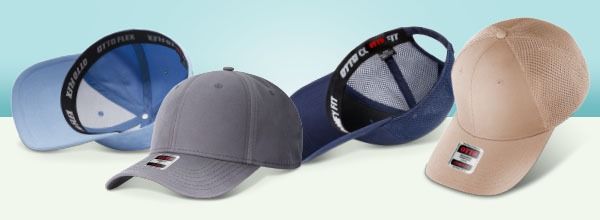
Here is the good news for bulk buyers. There are high-quality blanks from OTTO CAP and other manufacturers that are engineered with a slight mechanical stretch. They can often accommodate a variance of up to 1/4 size, making them safer for group orders than rigid polyester caps. However, relying on stretch alone is a rookie mistake. You want that stretch to provide comfort, not to compensate for a bad measurement. OTTO FLEX and OTTO COMFY FIT hats are engineered to be high-ROI branding tools. They are actually praised for their comfort and stretchability.
Tools You Will Need
It’s not that hard to get this right. Grab these simple tools:

- Flexible Measuring Tape: The kind used for sewing is ideal.
- A Piece of String & a Ruler: If you don’t have tape, this works just as well.
- A Mirror: Essential if you are measuring yourself.
- Sizing Chart: Keep a standard US hat size chart handy (or use an app).
Step-by-Step: The Tape Method

- Find the Sweet Spot: Place the end of the tape measure in the center of your forehead, roughly 1/8 to 1/2 inch above your eyebrows. This is where the sweatband will naturally rest.
- Wrap It Around: Run the tape around the sides, passing just above your ears. Aim for the widest part of the back of your head (the occipital bone).
- Check the Tension: This is where most people mess up. Pull the tape snug, but not tight. You should be able to barely slide one pinky finger under the tape and still not feel tight. If the tape is digging into your skin, your hat will too.
- Read and Repeat: Note the measurement in inches or centimeters. Do it one more time to confirm. If you get two different numbers, take the average.
Common Mistakes to Avoid
- Ignoring Hair Volume: If you or your customers have thick hair, braids, or locs, you must measure over the hair as it will be worn. Compressing bulky hair too much during measurement could lead to a hat that rides up.
- Overlooking Ovals: Most heads are "long ovals," but some are rounder. If you have a very round head, a standard fitted cap might pinch at the temples even if the circumference is correct. In this case, sizing up by 1/8 inch usually solves the pressure point issue. This isn’t very common though.
- Trusting the Label Blindly: A 7 1/4 in one brand might be a 7 3/8 in another. Always measure the head in inches first, then consult the specific size chart (available in our product pages) to find the match.
Pro Tips for Bulk Buyers & Decorators
- Embroidery Shrinkage: Here is a secret that experienced decorators know. Heavy embroidery shrinks the hat. If you are blasting a 3D puff logo with thousands of stitches onto the front panels, the backing and thread tension will pull the fabric slightly inward. This adds bulk inside the sweatband. For heavy stitch counts, consider sizing your blank order up by a fraction or advising customers to choose the looser end of their size range.
- The 60/40 Split: Stocking an inventory without specific orders? Use the 60/40 rule. Generally, about 60% of adult men fit into the Size 7 1/4 to 7 3/8 range (Medium/Large). allocate the bulk of your budget there, with 20% reserved for small sizes (7 - 7 1/8) and 20% for the larger heads (7 1/2+).
- Save Money with Samples: Never guess on a 50+ pieces order. Order a size run of blank samples from CapBargain first. We don’t have MOQs either so you get the best wholesale prices anyway. Put them on actual heads. Seeing how an OTTO FLEX fits a real person is worth more than any chart on a screen.
Ready to stock up? Now that you have the numbers, explore CapBargain to browse our huge selection of OTTO CAP fitted and flex styles.
Frequently Asked Questions
Q. How do I measure my head correctly?
Wrap a soft tape measure around the widest part of your head, about 1/2 inch above your ears and across the mid-forehead. Keep it comfortable. Measure twice to be safe, then compare your inches to a standard hat size chart that you can find in our product pages.
Q. What if I am between sizes?
We recommend rounding up to the next 1/8 inch. For example, if you measure 22 1/16 inches, go for the 22 1/8 (Size 7). The extra space is barely noticeable, but a too-tight hat is unwearable. Plus, OTTO FLEX styles often have enough to secure that slightly looser fit.
Q. Does hair affect the measurement?
It can, and it has for some of our customers. Ponytails, thick curls, or high-volume styles can add half a hat size or more. Measure with your hair in the style you plan to wear under the cap.
Q. Fitted vs. Flexfit - How does sizing differ?
Traditional fitted caps correspond to exact inch measurements (e.g., 7 1/4). Blank Flexfit caps like OTTO FLEX caps use ranges (S/M covers 7 to 7 1/4). Flex styles are more forgiving for bulk orders since one hat covers multiple head sizes.
Q. Can measurements change over time?
Yes. Weight gain/loss or growing out your hair can shift your size. Re-measure once a year to make sure you don’t get the size wrong.